

To remove all of one color in Photoshop, go to Select > Color Range, click the color you want gone, set Fuzziness to around 40, then press Delete (or add a layer mask). The whole guide below takes about a minute and works for backgrounds, logos, product shots and screenshots. We cover three methods — Color Range, Magic Wand and Hue/Saturation — and how to clean up edges afterwards.
Here, we will explore the two easiest methods for removing color in Photoshop from your images. You can use the one that seems easier.
To remove a specific color from an image in Photoshop using color range features, follow these simple step-by-step instructions:
Start by opening the image from which you want to remove the color. For this example, we will remove the background color of an image to create a transparent background.
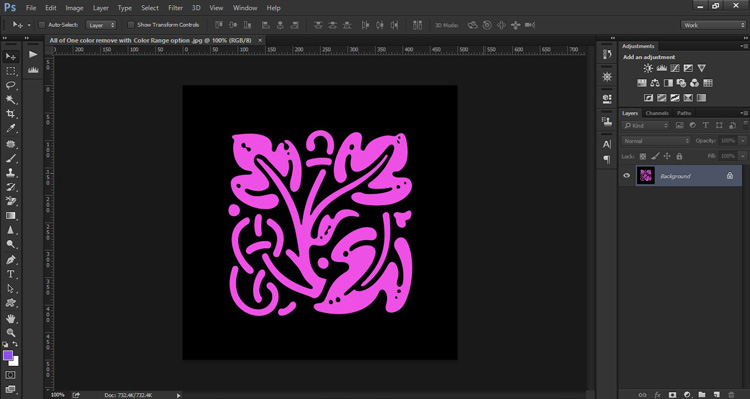
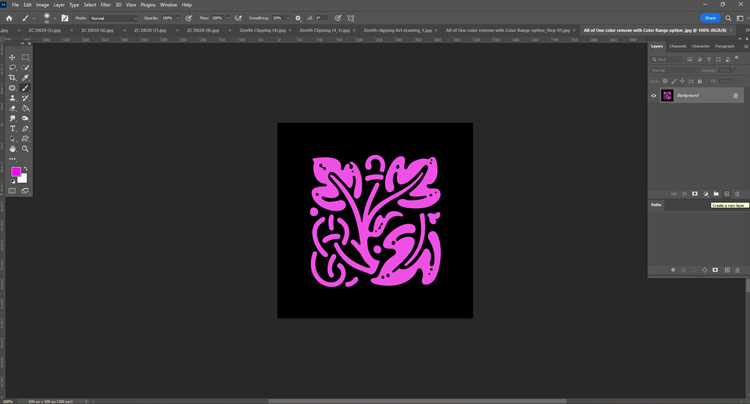
Make sure that the correct layer is selected. If you only have one image layer, it will likely be your background layer.
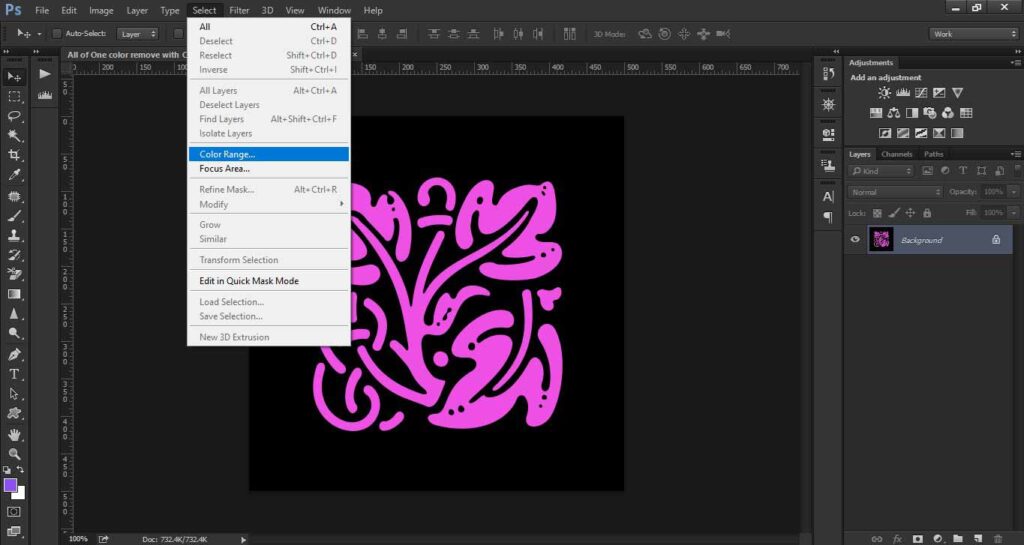
In the next step, go to the top of the screen, click on the “Select” menu, and choose “Color Range.” This tool allows you to select a specific color in the image.
In the Color Range window, you must use the “eyedropper tool” to click on the color you want to remove. Once you select the color, you’ll see a preview of the selection, where the white areas represent what will be removed.
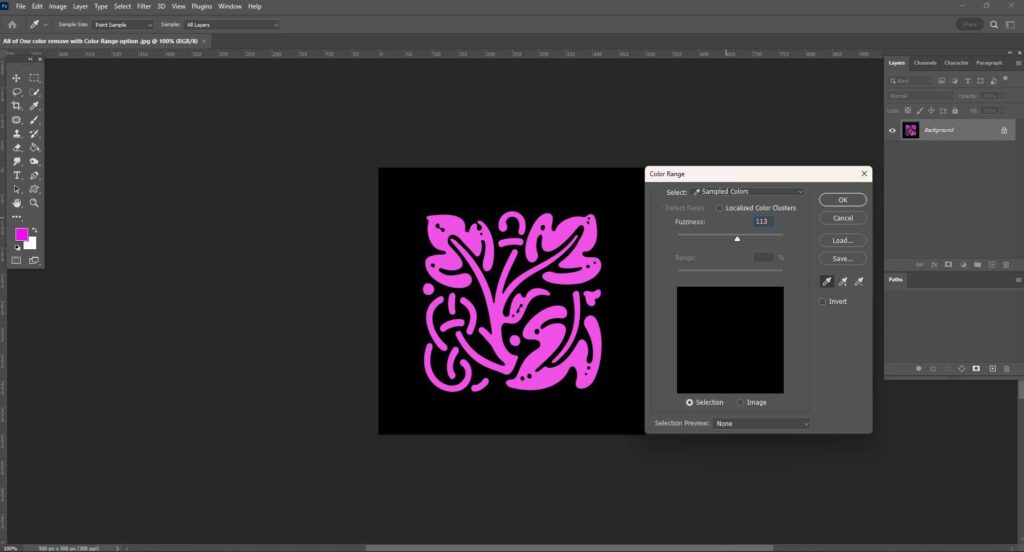
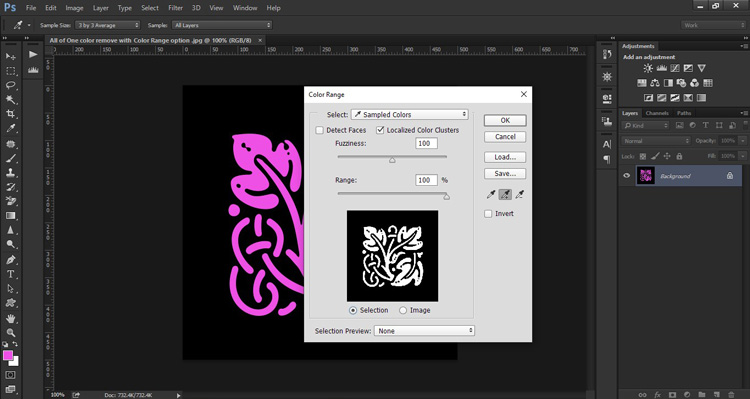
The “fuzziness slider” allows you to control how precise the selection is. Slide it to the left or right to adjust how much color is selected. However, make sure the areas should be dark that you want to keep in your images.
Once you are happy with the selection, click “OK.” It will create a selection of the colors you choose to remove from your image.
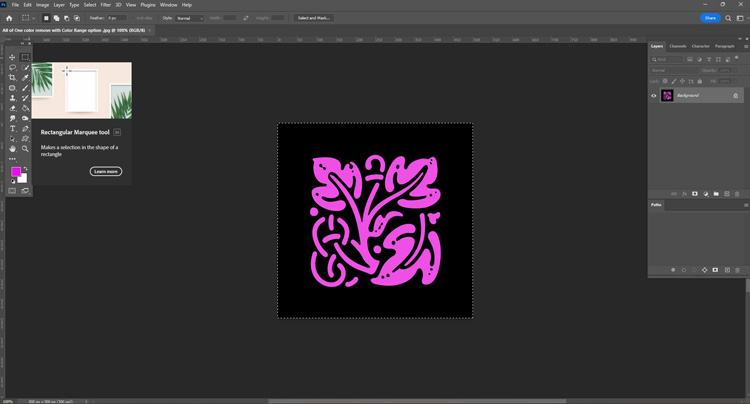
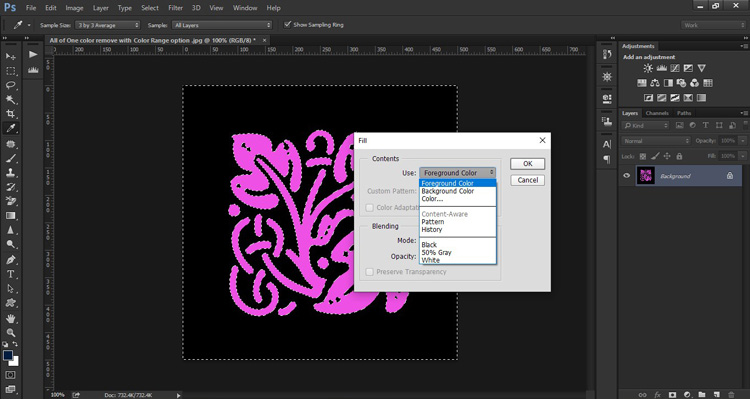
Now that the color is selected, switch to the “Rectangular Marquee Tool.” A window will pop up asking how you want to fill the deleted area. Choose “transparent” or leave it blank to maintain transparency.
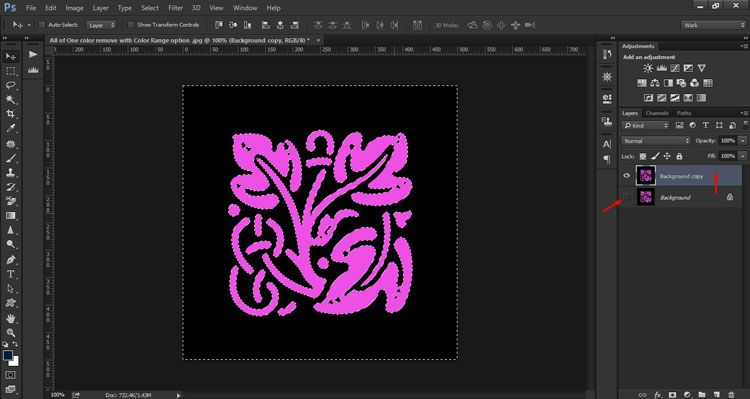
The next step is optional; if you want a completely transparent image, hide the background layer by clicking on the eye icon in the layers panel. This step ensures that the background is removed.
Sometimes, not all of the color will be removed in one go. If there are areas that did not get removed, go back to “Select > Color Range” and use the “Add to Sample” eyedropper tool to select more areas. You can also fine-tune your selection using the “Subtract from Sample” tool.
After removing the background or specific color, save your file as a “PNG.” This format preserves transparency so that you can overlay the image anywhere without a background.
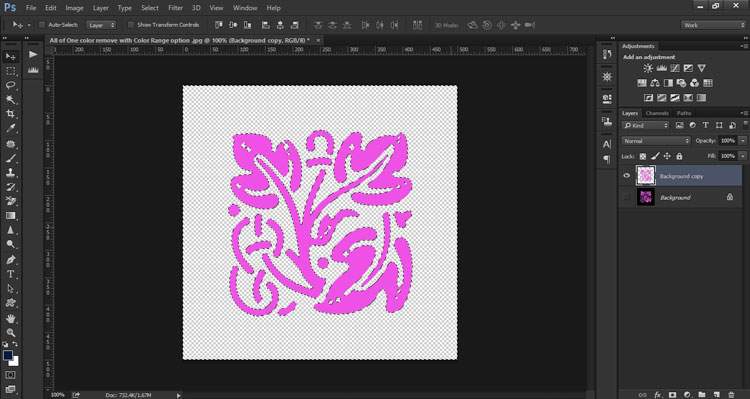
The magic wand is an excellent tool in Photoshop that can help remove a specific color from an image.
Here is a simple step-by-step guide to removing one color from an image in Photoshop using the Magic Wand tool:
Start by opening the image from which you want to remove color. To do this in Photoshop, open the image on the Photoshop screen.
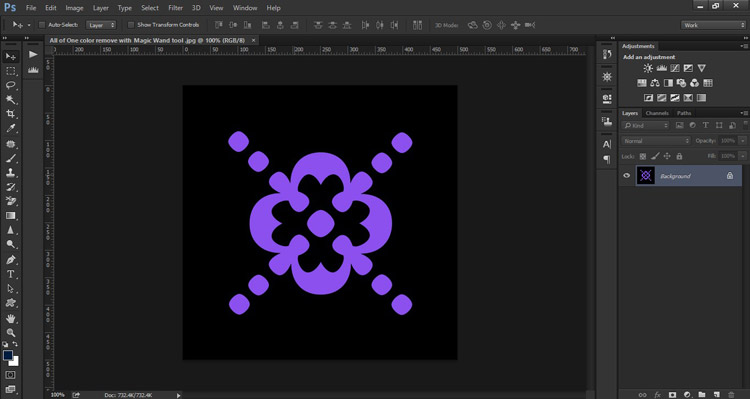
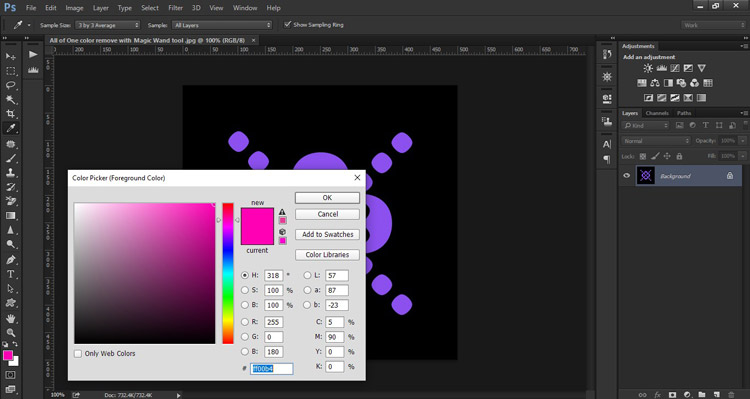
Once the selected image is opened, click the “Set Foreground Color” icon in the toolbar. Choose the color you want to replace the selected color with (for example, blue).
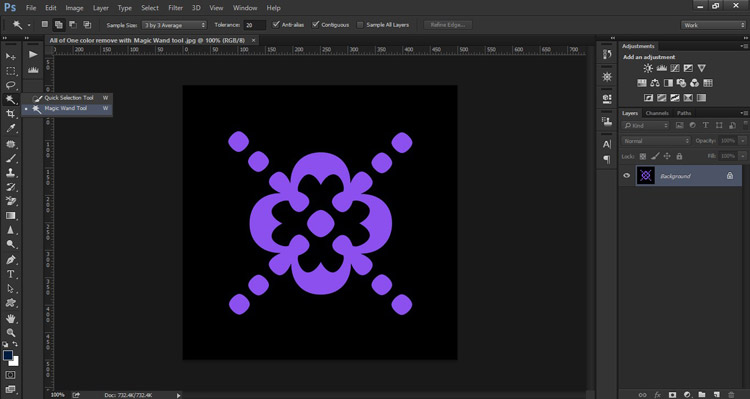
Next to that, go to the toolbar and click on the “Magic Wand Tool.”
Now, position your cursor over the image area containing the color you want to remove. Click on the area, and the Magic Wand will select all areas with similar colors.
Then, go to the “Edit” section and select “Fill.” In the “Use” section, choose “Color.” Use the eyedropper to click on the new foreground color (e.g., blue).
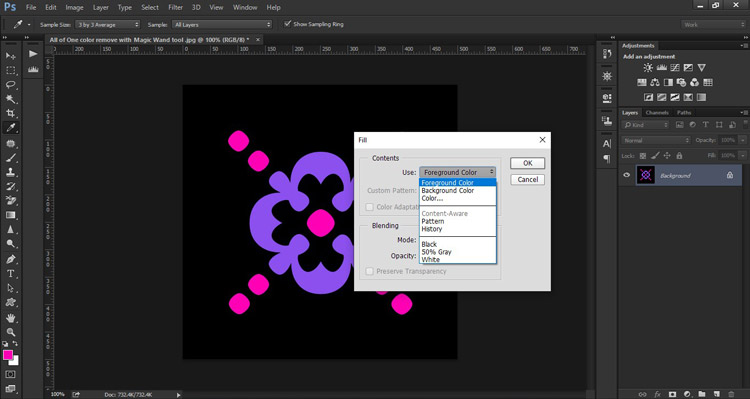
Click ok in the color selection window. The selected area will change to your chosen color.
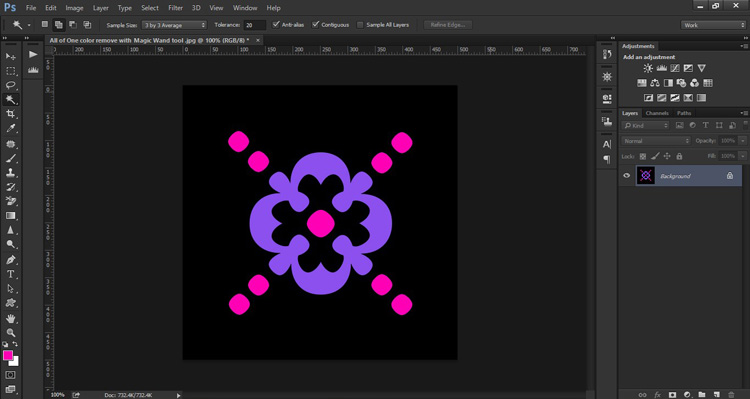
Finally, go to Select in the menu bar and click Deselect to remove the selection lines.
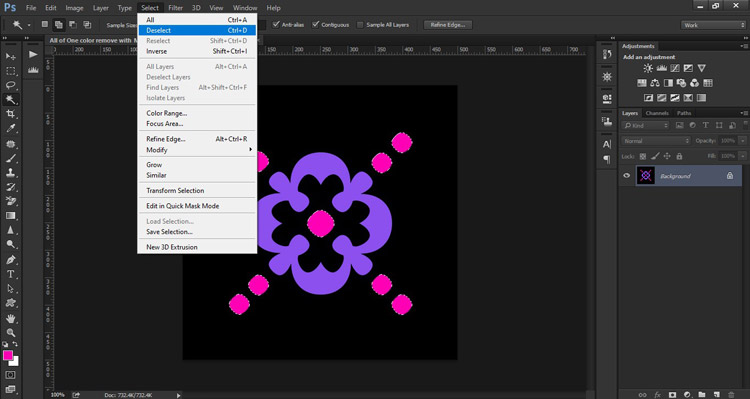
Well, you have successfully changed the color of a selected part of your image using Photoshop’s Magic Wand Tool.
If the color you want to remove fades into other tones — a red tint across skin, a blue cast in shadows, a colored glow — a hard selection leaves ragged edges. Instead, add a Hue/Saturation adjustment layer, choose the colour channel from the dropdown (Reds, Yellows, Greens, Cyans, Blues or Magentas), and drag Saturation down to −100 and, if needed, Lightness up. Use the eyedropper in the panel to target the exact hue, and widen or narrow the range sliders at the bottom until only that color is affected. Because it is an adjustment layer, you can paint on its mask with black to protect areas you want to keep, and nothing is permanently deleted.
Transparency only survives in formats that support it. After removing the color with any of the methods above, make sure the Background layer is unlocked (double-click it and press OK), confirm you can see the grey-and-white checkerboard where the color used to be, then go to File > Export > Export As, choose PNG and tick Transparency. If you save as JPEG the transparent area will be filled with white.
A thin halo of the old color often remains along the edges because Photoshop anti-aliases selections. To clean it up: with the selection still active, go to Select > Modify > Contract by 1 pixel and delete again; or, after deleting, use Layer > Matting > Defringe (1–2 px) or Remove White Matte / Remove Black Matte. For soft subjects such as hair, open Select and Mask, tick Decontaminate Colors and output to a new layer with a mask.
No Photoshop? Photopea (free, in the browser) has the same Select > Color Range and Magic Wand tools, and GIMP offers Select by Color plus Colors > Color to Alpha, which turns one color transparent in a single step. If you have hundreds of product images with a colored background or color cast to fix, our background removal service and color correction team can do it by hand from $0.39 per image.
No, removing a color with Photoshop’s Magic Wand tool does not reduce image resolution. The tool only selects and deletes pixels of a specific color or range. However, if large color areas are deleted, you may notice some impact on the image’s overall appearance.
If you want to maintain your image’s sharpness while removing all of one color from your image, use the “ Color range tool.” Then, create a mask on the layer to hide that color. Apply adjustments carefully and use the Refine Edge feature to keep edges sharp.
Adjust the ” Fuzziness ” slider in Photoshop’s Select Color tool to avoid removing shades similar to your target color. Lowering fuzziness narrows the range of selected colors, keeping similar tones intact. You can manually refine selections using Lasso or Quick Mask for more precise control over specific areas.
In Photoshop, removing one color using the Quick Selection tool can impact image gradients and textures if not followed properly. So, always take care while choosing the tool. Color selection image and wand tools are excellent options for removing color without impacting the quality of the image.
Go to Select > Color Range, click the color with the eyedropper, adjust Fuzziness so only that color is highlighted, click OK and press Delete.
Unlock the Background layer first, remove the color, then export as PNG (File > Export > Export As) with Transparency ticked. JPG cannot store transparency.
Anti-aliased edges keep a one-pixel blend of the old color. Use Select > Modify > Contract 1 px before deleting, or Layer > Matting > Defringe afterwards.
Yes. Record the Color Range steps as an Action, then run it on a folder with File > Automate > Batch. See our guide to exporting Photoshop actions for sharing it across computers.
Removing distracting colors can make your images more attractive and customized. However, always use the proper tools in Photoshop to get perfect results. You can follow our instructions to remove specific colors from images without compromising quality. But before starting, ensure you have read the instructions properly.
Related: how to export Photoshop actions, how to colorize black and white photos, and our image background removal service.