

The best MacBook for video editing in 2026 is the MacBook Pro 16-inch with M4 Pro or M4 Max: its media engines handle 4K and 8K ProRes timelines in DaVinci Resolve, Premiere Pro and Final Cut without proxies. The MacBook Pro 14-inch (M5) is the best portable choice, and the MacBook Air 15 (M4) with 24GB is the best budget option for 1080p and light 4K work. Below we compare chips, memory and displays, then rank each model.
You know, this is the core dilemma, isn’t it? Do you go for that raw, uncompromising power of a desktop, the best Mac computer for editing video firmly planted in your edit suite? Or do you go for the incredible freedom of a MacBook Pro for editing videos that you can literally take anywhere? That choice is really at the heart of the modern workflow when you’re looking for the best Mac to edit videos.
And the experts at Zenith Clipping, they totally agree. With Apple’s new silicon, deciding which Mac is best for video editing is more complex than it has ever been. But hey, that’s exactly what this explainer is for. We’re here to cut through all that noise and give you a clear, actionable guide to the best for video editing 2026 has to offer, helping you find the MacBook Pro best for video editing that’s truly built for you.
Let’s dive below for a detailed explanation!
All right, so now that you’re armed with that knowledge, let’s demystify the techie side of things. We’re going to break down the jargon into a super simple checklist so you can make a truly informed decision. Think of your Mac as having four key pillars.
The processor, that’s the engine. It’s all about how fast it works. Unified memory, or RAM, is like its short-term memory. How many things it can juggle at once without slowing down. Storage is your digital workspace. And the display, well, that’s the canvas where your creation comes to life.
And this slide right here, this is your cheat sheet. Zenith Clipping’s advice is super clear. Look for an M3 chip or newer if you can swing it. For memory, 16 gigs is the absolute minimum for smooth HD editing, but you’re going to want 32 or more for 4K. And with storage, please, don’t skimp. Start at 512 gigabytes, but honestly, one terabyte is a much safer bet for video projects.
The base M4 and M5 chips handle 1080p and light 4K editing. The M4 Pro adds more CPU and GPU cores for multi-layer 4K timelines. The M4 Max has the most GPU cores and a second video encode engine, so it is the pick for 8K, multicam and heavy effects, and it exports fastest.
Memory cannot be upgraded later, so buy for the work you expect. 16GB is the minimum, 24GB is comfortable for 4K, 32GB to 48GB suits long 4K timelines and effects work, and 64GB or more is for 8K and big multicam projects.
Apple silicon has hardware encoders and decoders for H.264, HEVC and ProRes. That is why MacBooks play back 4K footage smoothly without proxies and export quickly, even on battery.
The MacBook Pro has a Liquid Retina XDR mini-LED display with 120Hz ProMotion and up to 1,600 nits for HDR, which you need for HDR grading. The MacBook Air screen covers the P3 colour range but tops out at 500 nits and 60Hz.
Internal storage is also fixed. Get at least 1TB, and keep your footage on a fast external SSD.
The MacBook Pro has three Thunderbolt ports, HDMI and an SDXC card slot. The MacBook Air has two Thunderbolt ports, so you will need a hub or card reader.

Price Starting at $3499.00
But what if you need that desktop-level power in a backpack? Well, for that, Zenith Clipping crowns the 16-inch MacBook Pro for video editing with the M4 Pro or Max chip as the undisputed king of portables.
So let’s look at what makes this the top portable pick. You’re getting the same class of M4 Pro or Max processors, which is huge, but the standout feature of the MacBook Pro 16-inch for video editing has got to be that gorgeous 16.2-inch Liquid Retina XDR display. For on-the-go color grading and editing, that professional-grade screen with its incredible brightness and color accuracy is an absolute game-changer.
And here’s the verdict straight from a professional video editor. Rob Redman highlights that it’s not just about the raw performance leap. It’s the whole package. It’s that combination of power with a stunning display all wrapped up in that classic, sleek design that makes it the premier 16-inch MacBook Pro for video editing.

Price Starting at $1599.00
The M5 chip improves AI tasks. This model offers sustained performance. Active cooling prevents thermal throttling. The Liquid Retina XDR screen provides color accuracy. It represents the top choice for editors.
The Apple MacBook Pro 14-inch (M5, 2025) excels at video production. Its Neural Engine handles complex AI video processing tasks. The M5 chip delivers high multithreading scores for multimedia projects.
Editors work smoothly with heavy 4K footage in Adobe Premiere Pro. Enhanced graphics performance speeds up every render. This laptop remains a top choice for professional graphics processing. It is one of the most reliable video editing laptops.

Price Starting at $1999.00
This 14-inch MacBook Pro for video editing handles 4K timelines easily. The Apple MacBook Pro 14-inch (M4 Pro, 2024) features many ports. It includes an SD card slot. HDMI connectivity eliminates adapter needs. The M4 Pro chip delivers massive power.
The 2024 model remains a very capable machine. M4 Pro chips handle 4K projects with ease. Active cooling keeps the system stable during renders. Professional ports allow for quick media transfers. This laptop provides great value on the used market. It still supports the latest creative software updates.
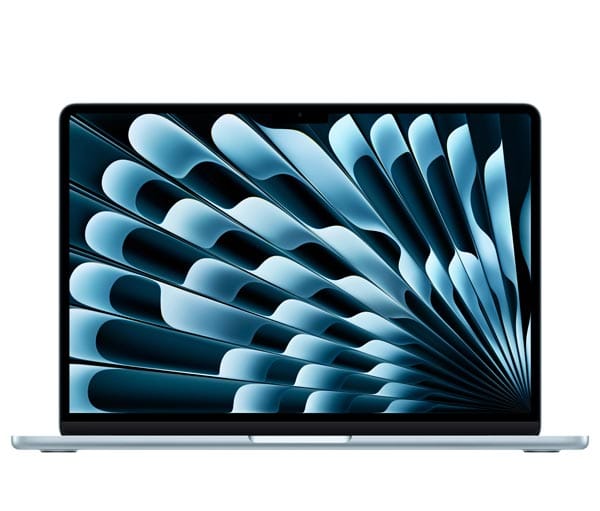
Price Starting at $1199.00
Many users ask if the MacBook Air is good for video editing. You can edit videos on a MacBook Air with the M4 chip. This MacBook Air for video editing offers a large screen. MacBook Air video editing works well for casual tasks. Professionals wonder if you can video edit on a MacBook Air during long renders.
Editing on a MacBook Air may cause thermal throttling. Video editing on a MacBook Air remains a portable option. Mac Air video editing benefits from great color accuracy. Users learn how to edit videos on Mac Air quickly. The MacBook Air and video editing experience suit social media creators. Some still use the MacBook Air M3 for video editing. MacBook Air is good for video editing, depending on your project complexity.
The 15-inch model offers a perfect balance of weight and size. Its slim design makes it ideal for travel. Users can easily manage photo editing on the go. Many ask if the MacBook Air is good for video editing in 2026. This MacBook Air for video editing handles short 4K clips.
MacBook Air video editing stays quiet due to the fanless build. You can edit videos on a MacBook Air without much bulk. Editing on a MacBook Air feels fast for daily content. Video editing on a MacBook Air works best for simple timelines. Mac Air video editing provides a large workspace for creators.
MacBook Air and video editing suit social media workflows well. The MacBook Air M3 for video editing remains a budget alternative. MacBook Air is good for video editing, depending on your project length. Can you video edit on a MacBook Air for long 8K files? It is unlikely.

Price Starting at $999.00
The 13-inch model offers maximum portability. It uses the same M4 chip. Battery life remains excellent for travel. The smaller screen limits your workspace. It shares the fanless design limitations.
The 13-inch model features a high screen resolution for its size. True Tone technology adjusts the colors to your environment. This is the most portable Apple MacBook Air 13-inch (M4, 2026) option.
It fits perfectly into small bags for students. The M4 chip provides surprising power for basic cuts. It remains a favorite for light creative work.

Price Starting at $599.00
The best Mac mini for video editing provides great value. This Apple Mac mini (M4, 2024) fits a dedicated desk setup. It offers desktop-class performance. Users must buy external monitors. The M4 Pro option handles heavy workloads.
The best Mac mini for video editing provides desktop power. The Apple Mac mini (M4, 2024) fits easily on small desks. Active cooling allows for sustained heavy renders. It offers the cheapest way to get M4 Pro performance. Professionals connect multiple displays for a full studio experience. It stays silent during intensive exports.
Every influencer needs a reliable mobile workstation today. The M2 chip delivers incredible power for HD videos. Many creators manage a successful YouTube channel with Apple hardware. The Mac Studio handles complex video production equipment setups easily. Some professionals even use a powerful iMac Studio for Blender 3D rendering.
These machines feature many fast input/output ports. High-speed USB-C connections support quick data transfers. Users attach large external hard drives for project safety. External storage remains vital for 8K footage. Some editors prefer the Nvidia GeForce RTX 5080 for raw speed. Others choose the NVIDIA GeForce RTX 4060 for budget builds. Powerful laptops utilize DDR5 VRAM for heavy effects.
Certain desktop builds use the AMD Radeon RX 6600 XT. Many Windows users pick the Intel Core i7-12650H processor. Discussion thrives within the Apple Support Community regarding system stability. A balanced system prevents performance bottlenecks during long sessions.
The MacBook Air has no fan. It edits short 4K projects well, but it slows down on long exports and heavy effects once it heats up. The MacBook Pro has active cooling, so it holds full speed for as long as the job takes. It also adds the XDR display, HDMI and an SD card slot. Choose the Air for travel, social clips and 1080p work. Choose the Pro if editing pays your bills.
The MacBook Pro 16-inch with M4 Pro is the best fit for 4K video editing: it plays multi-layer 4K timelines in real time and has the screen space for a full editing layout. Step up to the M4 Max for 4K multicam or 8K footage. On a smaller budget, the MacBook Pro 14-inch (M5) or a MacBook Air 15 with 24GB handles shorter 4K projects.
DaVinci Resolve leans on the GPU for colour grading, noise reduction and Fusion effects, so the MacBook Pro 16-inch with M4 Max is the best match. Premiere Pro gains most from the media engines and plenty of memory; an M4 Pro with 24GB to 48GB is enough for most 4K projects. Final Cut Pro is the best optimised of the three and runs well on every model in this list.
For 1080p and short 4K edits, 16GB of memory works. For regular 4K work, get 24GB to 32GB. For 8K, multicam or heavy effects, get 48GB to 64GB or more. For storage, 1TB is the practical minimum because apps, caches and project files fill 512GB quickly. Keep your footage on a fast external SSD.
The Apple MacBook Pro 16-inch with the M4 Max chip is the best choice. This model features a powerful 40-core GPU. Active cooling prevents thermal throttling during long renders.
Professional 4K workflows require at least 32GB of RAM. High-end 8K projects benefit from 64 GB or more. Unified memory handles large video assets efficiently. Higher RAM prevents timeline lag.
Macs offer deep hardware-software integration. Final Cut Pro runs incredibly fast on Apple Silicon. The ProRes engine accelerates video encoding. Battery life allows for long mobile editing sessions. Reliable stability reduces project crashes.
Macs provide superior portable efficiency. PCs offer better hardware customization. High-end NVIDIA GPUs excel in DaVinci Resolve. Apple displays remain the standard for color grading. The best platform matches your specific software needs.
Yes for short 4K projects with 16–24GB of memory. Because it has no fan, it slows down on long exports.
Choose the M4 Max for 8K, multicam and heavy effects. The M4 Pro is enough for most 4K work.
The MacBook Pro 16-inch with M4 Max, because Resolve’s colour grading relies heavily on the GPU.
1TB minimum. Edit from a fast external SSD.
The best Mac isn’t just the one with the highest specs or the biggest price tag. The best Mac is the one that fits you. It’s a personal decision based on your specific workflow, your budget, and the kind of projects you create day in and day out. Visit Zenith Clipping for the best professional editing services!
Related guides: the best computers for graphic design, the best laptops for photographers and what 4K resolution means. Short on time? Our video editing service and wedding video editing services can cut the footage for you.